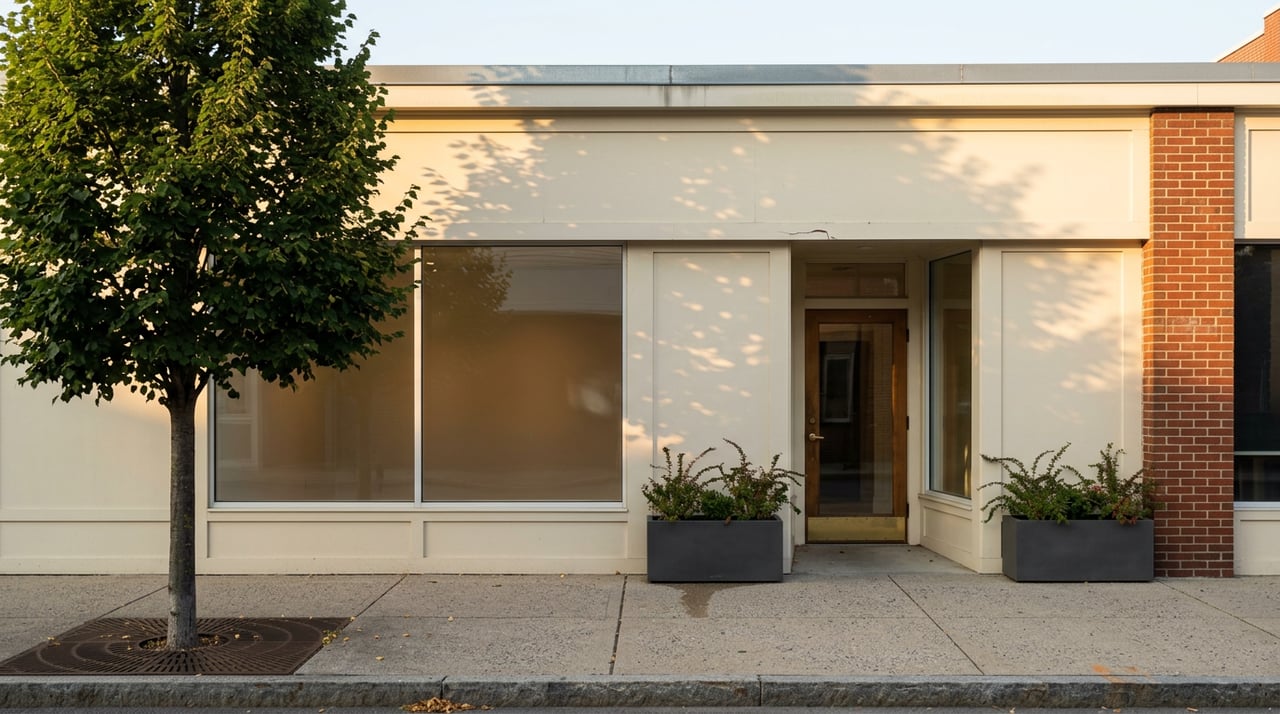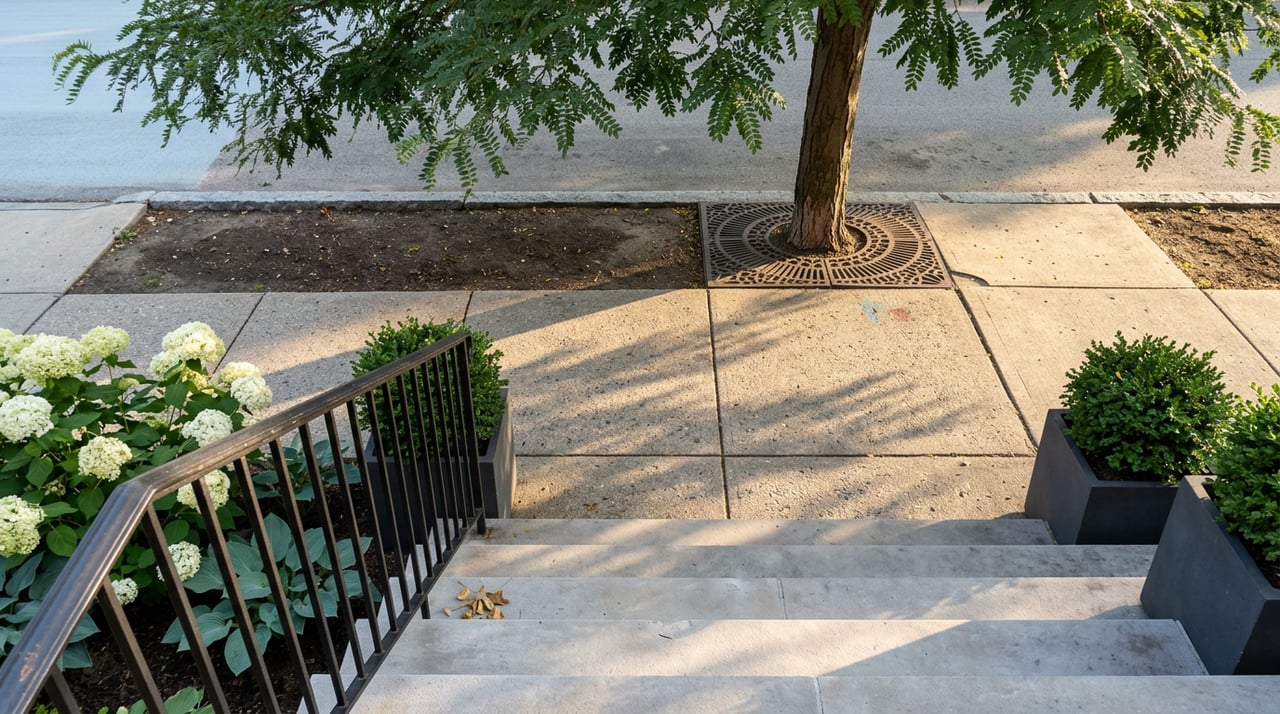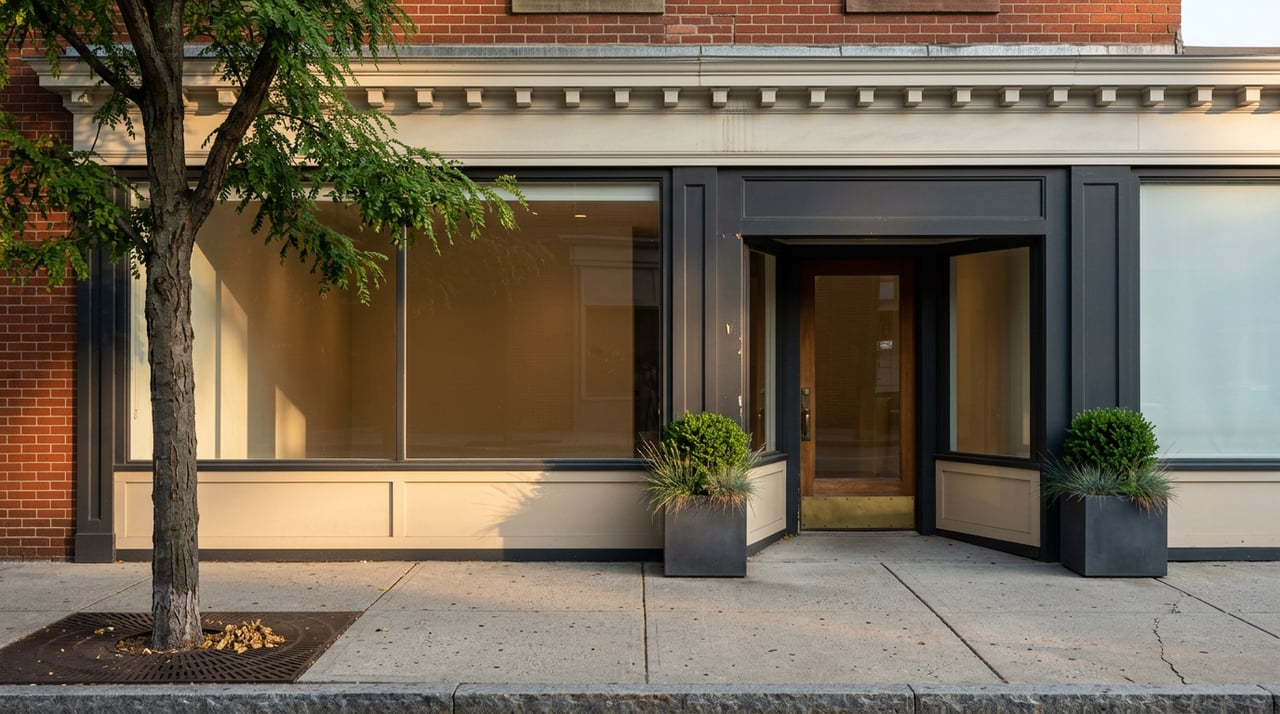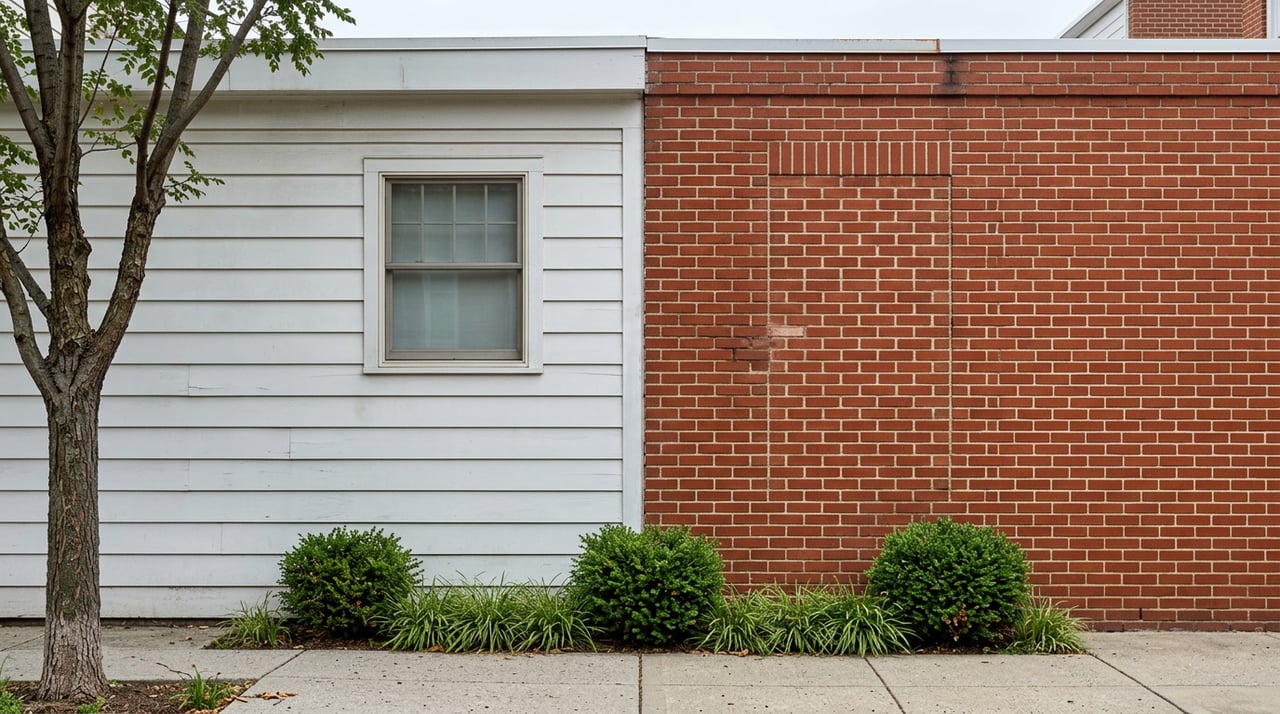
Stand at Crilly Court on a summer evening and the Old Town Triangle looks frozen in place. Small frame cottages, rebuilt in the years right after the 1871 fire destroyed the district's original German immigrant settlement, sit shoulder to shoulder with the brick rowhouses that replaced them once the city banned further wood construction. Walk two blocks south to the corner of North Avenue and LaSalle Drive and the picture flips entirely: a 36-story residential tower is rising where a Walgreens and a surface parking lot used to sit, part of a project that took nearly a dozen community meetings and more than a year of aldermanic wrangling to land.
Both blocks are Old Town. Both show up under the same neighborhood name on a listing sheet. But they behave like two different real estate markets, and the reason has nothing to do with taste or demand. It comes down to a designation made on September 28, 1977, when Chicago's City Council voted to protect most of the Triangle as a local landmark district. That single act created a permanent split: one side of the boundary can never add density no matter how hot the market gets, and the other side just proved, in real time, that it can.
If you own property inside the Triangle, are buying into it, or are weighing whether to renovate a home there, that split is the fact that should shape your decisions, not the median price on a listing site.
What Happened Two Blocks Away
The contrast is not theoretical. Developer Fern Hill spent years pursuing a residential tower at 1600 N. LaSalle Drive, on a site that sits just outside the Triangle's protected boundary. The original pitch called for 500 units at up to 480 feet. Second Ward Alderman Brian Hopkins rejected that version in January 2025, citing density and height. A compromise followed: a 30 percent cut in unit count, down to 349 apartments, and a height reduction of roughly 100 feet, to 379 feet. The Chicago Plan Commission approved the scaled-back plan on February 20, 2025, and the full City Council signed off on April 16, 2025, clearing the way for construction to begin.
That entire arc, from a developer's first filing to a shovel in the ground, ran through the normal machinery of Chicago zoning: a Planned Development amendment, community meetings, an alderman's leverage, a negotiated compromise. It is friction, but it is friction that ends in new supply.
None of that machinery exists for a parcel inside the Triangle. The district covers 523 structures, of which 198 were evaluated as architecturally significant enough to anchor the original landmark designation. Those buildings are not waiting for a developer to make the right offer. They are locked into their current form by ordinance, and the only path to major change runs through a different process entirely, one built to preserve rather than approve growth.
The Two Approvals Nobody Mentions Until Escrow
Inside the boundary, any exterior change visible from a public street, alley, or park triggers review by the Commission on Chicago Landmarks. That review sits on top of, not instead of, a standard city building permit. Two approvals, not one:
- A Certificate of Appropriateness, either granted administratively by Landmarks staff for routine work or decided at a public Commission hearing for anything larger
- A standard construction or alteration permit from the Chicago Department of Buildings
Staff-level approvals for straightforward requests typically move in two to six weeks. Anything that lands in front of the full Commission, new construction, additions, demolitions, tends to add another eight to sixteen weeks on top of that. The Old Town Triangle Association's own Historic District and Planning and Zoning Committee reviews proposals monthly and forwards recommendations to the 43rd Ward alderman before the Commission makes a final call, which means a homeowner's timeline can depend on where a project lands on a community calendar, not just a city one.
Windows come up more than almost anything else in this review process. They are explicitly called out as one of the most closely scrutinized elements in Triangle properties, because a window swap changes what the street sees. That has a direct consequence for anyone buying here: if a previous owner replaced windows without securing a Certificate of Appropriateness, that gap does not disappear at closing. The city can enforce against unapproved work regardless of who owns the property when the violation surfaces, so a buyer's due diligence checklist should include a request for prior Certificates and permits tied to any visible exterior work, not just a home inspection report.
Condo buyers face an added layer. Whether a Triangle building's homeowners association or the individual unit owner is responsible for window sashes and building envelope depends entirely on that building's declaration. A landmark designation does not resolve that question. It just adds a city-level review on top of whatever the HOA already requires.
The Incentive Almost Nobody Uses
Landmark status is not only a source of friction. Illinois runs a Property Tax Assessment Freeze Program for owner-occupants of certified historic residences, and Chicago's preservation ordinance qualifies. The mechanics are specific: the assessed value of the property freezes for eight years at the level it held the year rehabilitation began, then steps back up to market level over the following four years. To qualify, the eligible rehabilitation cost has to equal or exceed 25 percent of the assessor's fair cash value for the property, and the work has to follow the Secretary of the Interior's Standards for Rehabilitation.
That 25 percent threshold matters more than it looks. It is calculated against the assessor's fair cash value, not the purchase price, which means an owner who successfully appeals an inflated assessment before starting work can lower both the spending threshold required to qualify and the base the freeze locks in against. For anyone planning a substantial rehab inside the Triangle, checking the assessor's number before breaking ground is a small step that changes the math on a large program.
This is the detail that most renovation guides skip entirely, because it requires understanding both the tax mechanism and the historic review process well enough to see how they interact. The Illinois State Historic Preservation Office recommends contacting them before starting work specifically so a project can be structured to meet the Standards from day one instead of retrofitting compliance after the fact.
What the Neighborhood Median Actually Hides
Old Town's median home price sat at $450,000 as of July 2026, with townhomes ranging from roughly $575,000 to $1.375 million depending on size and condition. Those figures blend two products that are structurally incapable of behaving the same way going forward. Inventory inside the Triangle is fixed by ordinance. It cannot expand no matter how strong demand gets, because the same review process that adds weeks to a window replacement also forecloses the kind of large-scale redevelopment happening at 1600 N. LaSalle.
Inventory just outside the boundary is a different story. The Old Town Canvas project alone is adding hundreds of new units to a corridor that borders the protected district, and it will not be the only site to see that kind of change now that a precedent has cleared City Council. As that supply comes online, a neighborhood-wide median that averages fixed-supply Triangle properties against expanding-supply blocks nearby becomes a less useful number with each passing quarter. Anyone using that median to judge a Triangle listing is measuring the wrong market.
What This Means If You Are Selling, Buying, or Holding
For a seller inside the Triangle, the fixed-supply story is the sales pitch. Scarcity here is not marketing language. It is a legal fact backed by a 1977 city ordinance, and it is worth stating plainly in listing materials rather than leaving buyers to piece it together. Pair that with organized documentation: any past Certificates of Appropriateness, permits, and correspondence with Landmarks staff, ready before the home goes on the market rather than assembled under deadline pressure during due diligence.
For a buyer, the checklist runs in the opposite direction. Ask specifically about window history, since that is where undocumented work most often hides. Confirm whether the building's HOA declaration or the city holds jurisdiction over exterior elements if you are looking at a condo. And budget review timelines into any renovation plan from the start, since a staff-level approval and a full Commission hearing are not interchangeable on a project schedule.
For an investor eyeing multi-unit stock near the boundary, the Fern Hill outcome is worth studying closely. It shows that non-landmarked parcels adjacent to protected districts can absorb significant density once an alderman and a developer find common ground, which changes the calculus on what a nearby non-historic building might be worth to a future buyer with redevelopment in mind.
A Few Questions Worth Settling Early
Does landmark review apply to interior work? Generally no, unless the interior change affects the building's exterior appearance or alters a structural element visible from the street.
What if a previous owner made changes without approval? The city can enforce against unpermitted work at any point, and that liability follows the property rather than the person who made the change, which is why buyers should request documentation before closing rather than after.
Is a National Register listing the same as Chicago Landmark status? No. National Register listing is largely honorary and does not by itself restrict private work, though it can open the door to certain tax incentives. Local Chicago Landmark designation, which covers most of the Triangle, is the version that actually regulates what an owner can change.
Buying, selling, or renovating inside a landmark district is a different transaction than the one most Chicago real estate content assumes. Understanding the boundary, and what sits on either side of it, is the difference between pricing a Triangle property correctly and guessing.
Novit Soldit Group works both sides of this line regularly, from Triangle rehabs that need a Certificate of Appropriateness before a single window comes out to buyers weighing a landmark cottage against new construction two blocks away. If you're planning a move in Old Town, get your free home valuation and we'll walk you through what your specific block actually allows.