If you are looking for a small multifamily investment in Bucktown, you are not shopping in a sleepy corner of Chicago. You are looking at a neighborhood with strong pricing, active buyer demand, and rental appeal that can reward careful underwriting but punish loose assumptions. This guide will help you understand what makes Bucktown attractive, where investors can get tripped up, and how to evaluate a 2-to-4-unit deal with more confidence. Let’s dive in.
Why Bucktown draws small multifamily investors
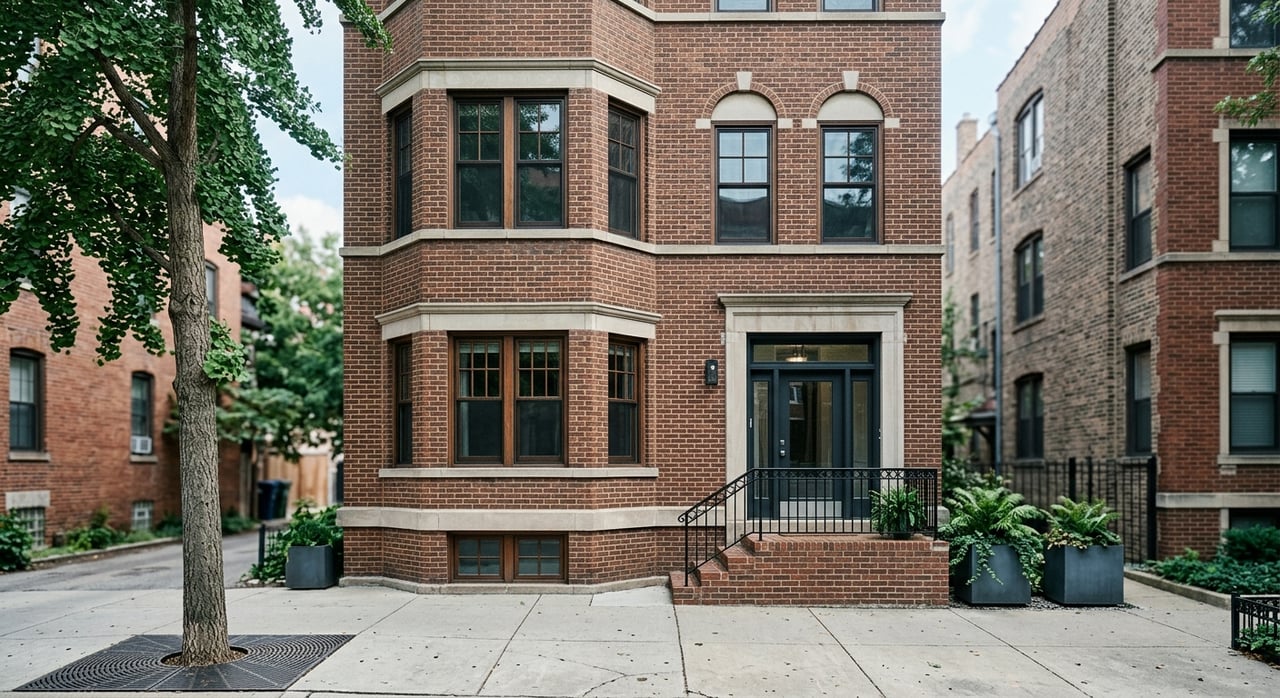
Bucktown sits on Chicago’s North Side and is commonly described as bounded by Fullerton to the north, the Chicago River to the east, North Avenue to the south, and Western Avenue to the west. The neighborhood has a long history and a housing stock shaped by sturdy older buildings, which is part of why two-flats, three-flats, and four-flats remain so relevant here.
For investors, Bucktown offers a mix that is hard to ignore. It is a transit-connected, walkable neighborhood with a well-established housing market and a rental base that supports demand for small multifamily properties. In a city where 2-to-4-unit buildings are a major part of the housing stock, Bucktown stands out as a premium submarket where execution matters.
Bucktown market snapshot
Current market data points to a neighborhood that remains expensive and active. Redfin reports a median sale price of $698,000 in March 2026, average days on market of 34, and a sale-to-list ratio of 101.9 percent. That combination suggests competition is still real, even when buyers are being selective.
On the rental side, Apartments.com shows average rents of $2,499 for one-bedrooms, $3,152 for two-bedrooms, and $3,768 for three-bedrooms. RentCafe reports an overall average rent of $3,040 and notes that 61 percent of households are renter-occupied. These figures come from different sources with different methods, so they are best used as directional signals rather than exact comps.
What the numbers really mean
The big takeaway is not just that Bucktown is expensive. It is that both purchase prices and rents are elevated at the same time. That can create opportunity, but it also narrows your margin for error.
If you overestimate post-renovation rent, underprice your rehab scope, or miss a permit issue, your returns can change fast. In Bucktown, strong market fundamentals help, but they do not replace disciplined due diligence.
Why small multifamily still matters in Chicago
Chicago’s 2-to-4-unit buildings remain one of the city’s most important housing types. DePaul University’s Institute for Housing Studies says these properties make up 26 percent of Chicago housing stock and are still the most common rental housing type in the city.
That same research also found that Chicago has lost more than 4,800 of these buildings and 11,775 units since 2013. In higher-cost neighborhoods, the 2-to-4-unit stock declined by 7.1 percent from 2013 levels. For Bucktown investors, that matters because existing small multifamily inventory can be both scarce and highly desirable.
Unit mix can support demand
One useful underwriting detail is unit size. A northwest-side ordinance FAQ notes that 40 percent of Chicago two-to-four flats contain three bedrooms or more. That matters because larger units can widen your renter pool and support steady demand in a neighborhood where location and layout carry real value.
In practical terms, a clean, legal building with a strong unit mix may be more attractive than a property that looks flashy on paper but has functional issues. In Bucktown, the basics often drive performance.
What supports rental demand in Bucktown
Bucktown benefits from lifestyle and transportation features that make it appealing to renters. Apartments.com describes the neighborhood as exceptionally walkable and strongly transit-connected, with Blue Line access at Damen and Western and the 606 along the south end of the neighborhood.
For you as an investor, those features matter because they can support broader renter appeal and potentially better tenant retention than a more car-dependent area. A convenient location does not guarantee performance, but it can strengthen the long-term rentability of a well-run property.
Focus on rentability, not just top-line rent
Bucktown rent data shows a premium market, but not a perfectly uniform one. That is why investors should be careful about underwriting to the highest rent they can find in a listing search.
A better approach is to evaluate whether the units are legal, clean, well-located, and aligned with what renters in the neighborhood actually want. In many cases, stable cash flow comes from realistic rent assumptions and reliable operations, not from chasing an aggressive headline number.
How to underwrite a Bucktown small multifamily deal
A practical framework starts with in-place rent and realistic market rent. From there, subtract vacancy, repairs, capital reserves, insurance, taxes, utilities, and debt service. That sounds simple, but each line item deserves scrutiny in Bucktown because higher prices can make even small misses expensive.
You also need to be conservative about timing. In an active, higher-cost market, value-add deals usually depend on a disciplined rehab budget and a realistic stabilization timeline. Optimistic pro formas may look exciting, but they are not a substitute for a clear operating plan.
Key underwriting questions to ask
- What are the current rents, and are they supported by actual leases?
- How do those rents compare with realistic neighborhood rent ranges for similar unit sizes?
- Are utilities separately metered, or will you absorb some operating costs?
- What deferred maintenance is visible today?
- Will your renovation plan trigger permits, zoning review, or occupancy issues?
- How much reserve do you need for repairs and turnover in an older building?
- Are property taxes in line with the current assessment and your hold strategy?
Renovation and permit issues to check early
Value-add can be appealing in Bucktown because of the neighborhood’s older building stock, but renovation risk needs to be tested early. Before underwriting a deal around added value, you should check the parcel on the City of Chicago zoning and land use map.
Chicago’s Building Rehabilitation Code applies to repairs, alterations, changes of occupancy, additions, and relocations of existing buildings. The city also states that zoning review must be approved or waived before a permit can be issued. If your contractor does not have current insurance on file with the city, permit issuance may be blocked.
Certificate of Occupancy matters more than many buyers expect
If your project changes occupancy or finishes previously unoccupied space, a Certificate of Occupancy may be required. This is especially important if you are looking at basement build-outs, attic conversions, or changes to unit count.
The city notes that incomplete work or unresolved deficiencies can prevent issuance. That means a project that looks straightforward at first glance can hit delays if the scope is not understood correctly from the beginning.
Landmark review can affect timelines
If a property is landmarked or located in a landmark district, the Commission on Chicago Landmarks reviews permit applications for work affecting significant features. Routine maintenance and ordinary permits still follow the normal path, but you should verify that status before assuming your renovation schedule.
In Bucktown, where older buildings are part of the neighborhood fabric, this is one more reason to investigate before you finalize your numbers.
Landlord rules can change your risk profile
Chicago’s Residential Landlord and Tenant Ordinance, or RLTO, is an important operating consideration. The ordinance excludes dwelling units in owner-occupied premises with six units or fewer, but some sections still apply, including certain rules on rental agreement terms and interruption of occupancy.
Security deposits deserve special attention. The RLTO requires deposits to be held in a separate interest-bearing account, requires a receipt, requires annual interest payments after six months, and allows double-damages exposure for noncompliance. For a small investor, that is not a minor detail. It is a real compliance risk.
Why lease review matters
If you are buying an occupied property, the lease file is part of your underwriting. You want to understand current rent terms, deposit handling, and any operating practices that may create issues after closing.
This is especially true if you are buying from a hands-on owner who may not have run the property with institutional systems. A careful review can help you spot risk before it becomes your problem.
Property taxes need a place in your model
Property taxes are a major expense line in any Chicago-area investment analysis. The Cook County Assessor states that Class 2 properties include multifamily residential buildings with no more than six dwelling units and are assessed at 10 percent of estimated market value.
The Assessor also notes that reassessment notices arrive every three years and typically allow about 30 calendar days to appeal. Appeals can be filed without hiring an attorney. For you, that means tax planning should be built into your hold strategy, not treated as an afterthought.
Policy changes can affect your strategy
For some north and northwest side properties, the Northwest Side Housing Preservation Ordinance adds another layer of review. The ordinance includes demolition surcharges, tenant rights of first refusal, and limits on converting two-, three-, and four-flats to luxury single-family homes on certain blocks.
Even if a property is not directly covered, the ordinance is a reminder not to assume a teardown or deconversion path will be simple. In Bucktown, parcel-by-parcel verification is essential before you base your numbers on a major change in use.
What a strong Bucktown deal often looks like
In this neighborhood, a strong small multifamily investment is not always the property with the biggest renovation story. Often, it is the building with a legal and useful unit mix, a location that supports renter demand, and a realistic path to stable operations.
That might mean buying a well-maintained two-flat with upside through improved management. It might mean acquiring a three-flat where updates are needed but zoning and occupancy risk are manageable. The point is to prioritize clarity over speculation.
Why local guidance matters in Bucktown
Bucktown is block-sensitive, building-specific, and process-heavy in ways that can surprise even experienced buyers from outside the city. A local team can help you evaluate zoning and permit issues early, understand lease and tenant exposure, and identify whether a deal truly pencils out.
That is especially valuable when inventory is competitive and older buildings come with hidden variables. In a neighborhood like Bucktown, operational knowledge can matter just as much as the purchase price.
If you are thinking about buying a small multifamily property in Bucktown, Novit Soldit Group can help you evaluate opportunities with local perspective, investor-minded analysis, and hands-on guidance from search to closing.
FAQs
What makes Bucktown attractive for small multifamily investing?
- Bucktown offers a mix of strong sale prices, premium rents, walkability, transit access, and a housing stock that still includes many two-, three-, and four-unit buildings.
What rent levels should you expect in Bucktown multifamily properties?
- Directional neighborhood data shows average rents around $2,499 for one-bedrooms, $3,152 for two-bedrooms, $3,768 for three-bedrooms, with broader rental averages around $3,040 depending on the source and methodology.
What should you check before renovating a Bucktown two-flat or three-flat?
- You should verify zoning, permit requirements, contractor compliance, possible Certificate of Occupancy needs, and whether landmark review could affect your timeline or scope.
How does Chicago RLTO affect Bucktown small multifamily owners?
- Even where owner-occupied buildings with six units or fewer are partially excluded, some RLTO sections still apply, and security-deposit rules can create serious compliance exposure if handled incorrectly.
How are Bucktown small multifamily properties taxed in Cook County?
- Multifamily residential buildings with no more than six dwelling units are generally classified as Class 2 property and assessed at 10 percent of estimated market value according to the Cook County Assessor.
Why is local help useful when buying a Bucktown investment property?
- Local guidance can help you assess block-level demand, spot zoning and permit risk early, review lease and tenant issues, and underwrite older buildings more carefully in a competitive market.