Selling a pool home in South Miami can be a major advantage, but only if buyers see a sparkling, safe, and well‑documented asset instead of a project. You want clean water, reliable equipment, and peace of mind on safety. With the right prep, you can turn your backyard into the feature that drives offers and smooths inspections. In this guide, you’ll learn exactly how to prepare, what paperwork to gather, which safety checks matter, and how to stage and photograph your pool area so it shines. Let’s dive in.
What South Miami buyers expect
South Miami buyers want year‑round enjoyment, not surprises. They expect clear water, recent service records, and equipment that works as it should. Safety features and documentation are big trust builders during showings and inspections. If you can present clean chemistry reports, recent invoices, and visible safety devices, you set the right tone from the first visit.
Gather permits, records, and warranties
Permit and inspection history
Buyers and title companies often ask for evidence that major pool work was permitted and inspected. Pull records for pool construction, resurfacing, heater or electrical work, and any hurricane‑related repairs. Use the county’s resources to request copies of permit history, contractor invoices, and final approvals. You can start with the official Miami‑Dade County permitting resources for lookups and record requests.
Disclosures and insurance basics
You should disclose known material defects tied to the pool, such as leaks, equipment issues, or prior repairs. Sellers in Florida typically use standard disclosure documents. If you have questions about what to disclose, confirm with a Florida‑licensed agent or attorney. Also consider notifying your insurer about the sale and verifying liability coverage, since buyers and their insurers will consider visible safety features.
What to collect now
- Permits and final inspection certificates for construction and major repairs
- Recent service invoices for pump, filter, heater, salt cell, automation, and resurfacing
- Equipment manuals and any transferable warranties
- Chemistry logs or a recent professional water test
- Proof of fence or barrier compliance if you have it
- Photos that document repairs or hurricane‑related work
Confirm safety and code compliance
Anti‑entrapment drain safety
Verify that your main drain covers are secure and compliant with anti‑entrapment standards. The federal Virginia Graeme Baker Act sets requirements that help prevent suction entrapment. If you recently replaced drain covers or installed safety devices, keep the invoices handy. To learn more about the standard, review the CPSC VGB Pool & Spa Safety guidance.
Barriers, gates, and alarms
Check that your pool barrier meets local code for height and gaps. Gates should self‑close and self‑latch. If you have door or gate alarms, confirm they work and keep them visible during showings. For local clarity on barrier requirements or to verify permits, consult the Miami‑Dade County building resources. For additional prevention tips, the Florida Department of Health drowning prevention resources are helpful.
Showing‑day safety
Keep gates closed and latched between showings and remove trip hazards. If families with small children will attend, coordinate with your agent to manage pool access and maintain supervision. Safety is part of your presentation and reduces liability concerns.
Tune‑ups that pay off before listing
Professional cleaning and filter service
Hire a licensed pool company to deep clean tile, grout, coping, and visible surfaces. Remove scale and stains on the waterline for better photos. Backwash sand or DE filters, or clean or replace cartridges. Keep the service receipt to show your maintenance routine is up to date.
Pumps, salt systems, and heater
Confirm the pump runs quietly without leaks and document any recent repairs. Clean the salt cell per manufacturer guidance and note the last replacement date. Test the heater and automation so you can demonstrate reliable operation during showings. If you use automation, have the app or controller ready to display settings.
Lighting and accessories
Test underwater lights and landscape lighting around the deck. Inspect handrails and coping for stability and visible cracks. Small fixes go a long way on buyer confidence.
Nail water clarity for photos and showings
Chemistry targets buyers trust
Aim for clear, balanced water. Typical outdoor residential pools maintain free chlorine in the range of 1 to 3 ppm and a pH around 7.2 to 7.8. Keep alkalinity, cyanuric acid, and calcium hardness within professional guidance to protect surfaces and chlorine effectiveness. For public health guidance on safe disinfectant levels, review the CDC Healthy Swimming guidance.
A quick test strip is fine for a daily check, but a recent professional water analysis or a certified pool tech printout is stronger evidence for buyers. Get one within 1 to 2 weeks of listing and again just before photography.
Operations on photo and showing days
Run the circulation pump several hours before photos and open houses so the water sparkles. Skim debris and empty skimmer baskets an hour before visitors arrive. Keep chemicals and buckets out of sight, but have your latest service records ready to share.
After storms in hurricane season
Heavy rain and high humidity can trigger algae blooms. If a storm hits right before photos or showings, schedule an extra cleaning and water treatment. You want crystal‑clear water on camera and in person.
Stage the pool as outdoor living
Declutter and refresh finishes
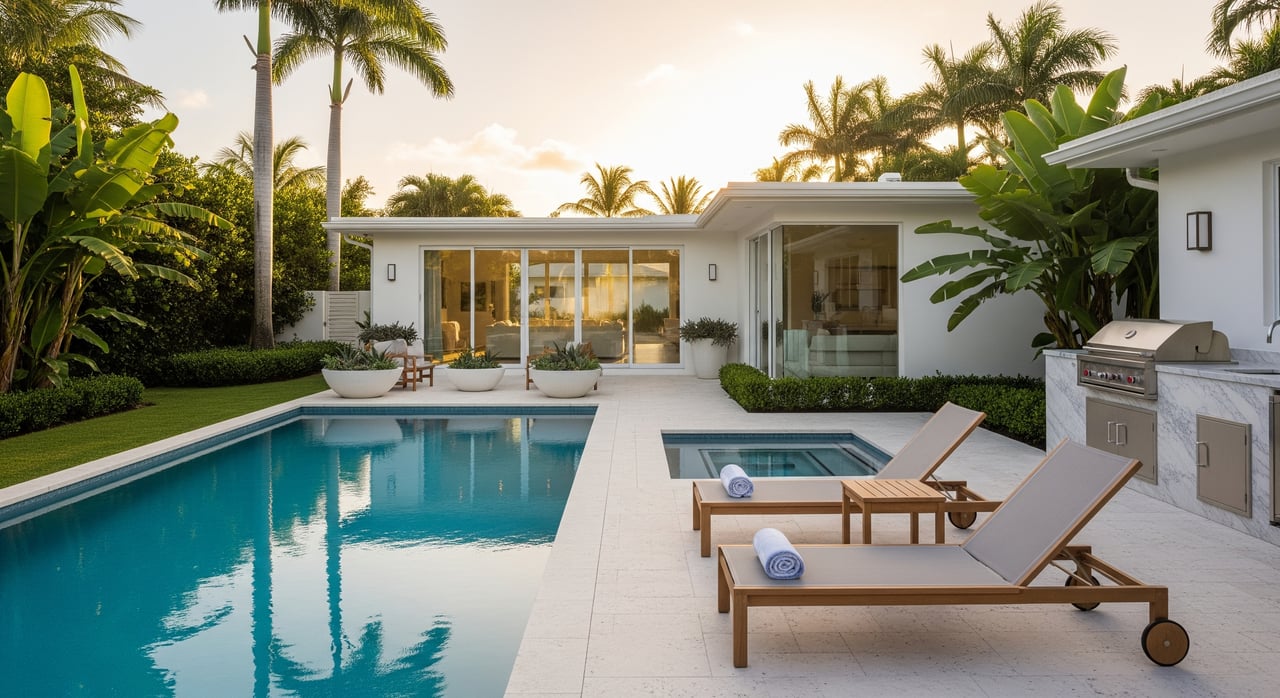
Remove toys, hoses, and chemical containers. Pressure wash the deck, clean grout, and repair cracked coping or pavers. Replace torn cushions and faded umbrellas. Leave only a few tasteful props, like a neatly folded towel set or a small plant, to suggest a lifestyle without clutter.
Shade, privacy, and easy entertaining
Show how the area works for everyday living and gatherings. Arrange a dining set, lounge seating, or a small drink station to highlight entertaining space. Trim hedges, remove brown fronds, refresh mulch, and add low‑maintenance potted plants for color. If you have hedges, screening, or umbrellas, make sure they read as shade and privacy features, which are highly valued in the Miami heat.
Photo and video tips
Shoot at golden hour to reduce glare and capture warm, inviting light. Combine wide shots that show the pool, patio, and landscaping with detail shots of waterline tile, lighting, and spa jets. If you are using aerials, verify local rules and any HOA restrictions. For more on listing photos and staging, see the NAR listing photo best practices. Keep images realistic and avoid heavy editing that misrepresents water color.
Highlight upgrades buyers value
Energy‑efficient upgrades like variable‑speed pumps, modern automation, and well‑maintained salt systems are strong talking points. If you upgraded after a storm, note hurricane‑related repairs or improvements and have permit records ready. Buyers in South Miami appreciate systems that are easy to operate and economical to run.
3 to 4 week prep timeline
- 3 to 4 weeks out: Schedule a full pool service and inspection with a licensed local company. Request a written service report and invoices. Pull permit history and past contractor invoices from county records. Address minor repairs like regrouting tile, fixing coping, resealing pavers, servicing the pump or heater, and replacing bulbs. Start landscape cleanup.
- 7 to 14 days out: Professionally clean the pool, balance chemistry, and plan photography. Deep clean the deck and furniture. Stage the pool area to emphasize seating, dining, and pathways. Test lighting scenes.
- Photo and video day: Run circulation, skim debris, close gates, and ensure safety devices are visible but not distracting. Provide access to show spa jets, waterfalls, and lighting. If using a drone, confirm permissions and notify neighbors if needed.
- Listing period: Keep service on a frequent schedule and maintain chemistry. Handle leaf and debris removal before each showing. Keep maintenance records, manuals, permits, and warranties in a folder ready for buyers and their inspectors.
Seller checklist
- Permits and final inspection certificates for pool construction, major repairs, and electrical work
- Service invoices from the past 12 to 24 months
- Recent professional water test or analysis printout
- Equipment manuals and transferable warranties for pump, heater, salt system, and automation
- Proof of resurfacing, tile, coping, or other repairs
- Proof of barrier or gate compliance if available
- Current pool service contract and whether it is transferable
- Photos showing before and after for hurricane or major repairs
Simple answers to common buyer questions
- Is the pool safe for children? Share barrier details, self‑latching gates, alarms, and drain cover information. Provide the latest safety inspection or permit documents if available.
- How old is the equipment and what does replacement cost? Share model numbers, install dates, and warranties. Suggest buyers get local quotes for replacement costs since lifespans vary by use and maintenance.
- Has the pool had algae or water quality issues? Provide chemistry logs and recent professional cleaning invoices. Explain that heavy rain can impact chemistry and that routine service keeps the water balanced and clear.
- Are there unpermitted repairs or known issues? Disclose what you know, describe any corrective steps already taken, and provide permit records if available.
Pro tips and extra resources
- For pool care practices and equipment guidance, the Pool & Hot Tub Alliance resources can be helpful.
- For federal safety information on drain covers and entrapment protections, review the CPSC pool and spa safety page.
- For health guidance on disinfectant levels and swimmer safety, check the CDC’s Healthy Swimming hub.
- For local permitting and building information, start with Miami‑Dade County’s official site.
Ready to position your South Miami pool home as a clear, safe, and turnkey asset? Let our boutique team handle the prep, staging, and polished marketing so you get to market with confidence. Get your free home valuation and a tailored action plan with the Novit Soldit Group.
FAQs
What documents do I need for a South Miami pool sale?
- Gather permits and final inspections for construction and major repairs, recent service invoices, a professional water test, equipment manuals and warranties, and any proof of barrier compliance.
How can I prove my pool is safe to buyers?
- Show evidence of compliant barriers and gates, working alarms, and anti‑entrapment drain covers. Provide recent inspection or permit records and keep devices visible during showings.
What are recommended chlorine and pH levels for showings?
- Typical targets are 1 to 3 ppm free chlorine and a pH around 7.2 to 7.8, verified by a professional test for buyer confidence.
Do I need to fix minor cracks or worn coping before listing?
- Small repairs often pay off by improving first impressions and reducing inspection objections. Fix obvious cracks, regrout tile, and replace broken lights or worn cushions.
How should I time photos around Miami’s weather?
- Aim for golden hour and schedule a professional cleaning after heavy rain. Run the pump before photos to keep water clear and remove floating debris an hour before the shoot.