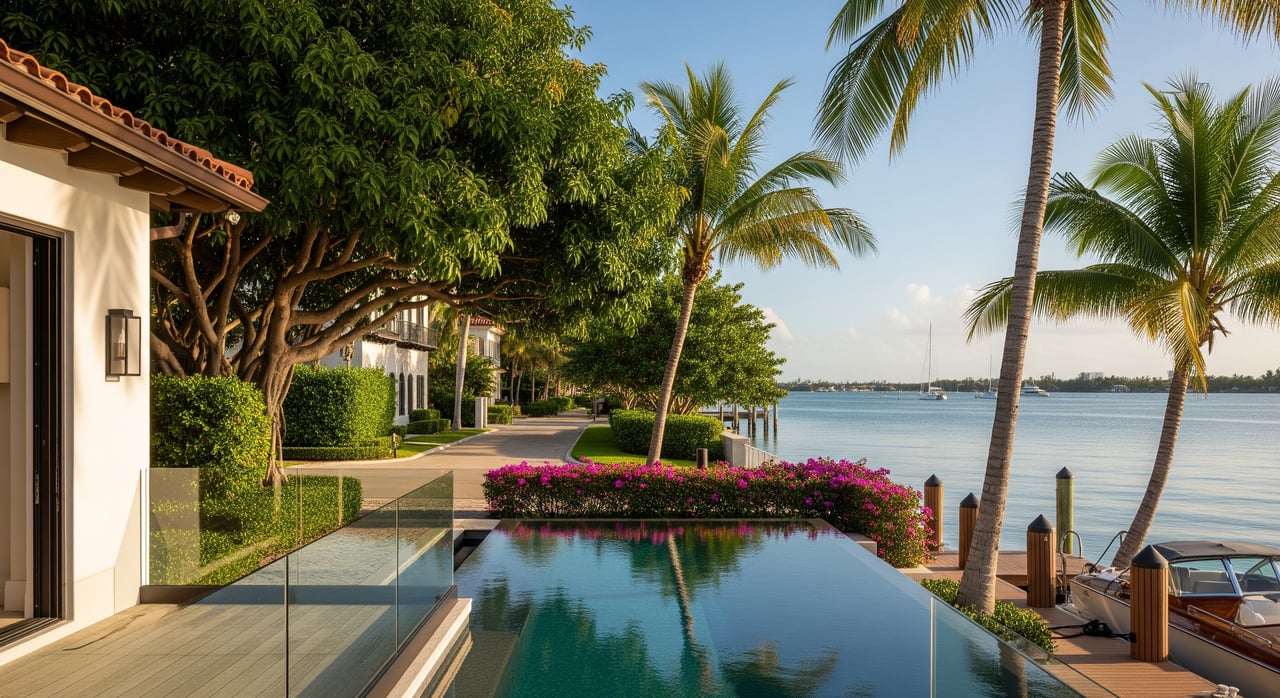
Is a Biscayne Bay view worth the premium, or would you rather keep your budget flexible and drive five minutes to the marina? If you are weighing Coconut Grove waterfront against non‑waterfront living, you are not alone. The choice affects your purchase price, insurance, maintenance, boating options, and day‑to‑day routine. This guide breaks down the tradeoffs so you can align the right property with how you want to live in the Grove. Let’s dive in.
How the market differs in Coconut Grove
Waterfront homes in the Grove tend to command a premium because of scarcity, open water views, and access to private docks. That premium varies by property type, lot size, dock rights, and condition. For a clear read on current premiums in your target micro‑area, lean on recent sales and MIAMI Realtors market reports.
Higher assessed values usually mean higher property taxes. Waterfront condos or HOA communities that maintain docks and seawalls can also have higher HOA fees. You can review assessments and historic tax data through the Miami‑Dade Property Appraiser.
When you compare options, focus on total cost of ownership, not just list price. Add purchase price, homeowners and flood insurance, HOA dues, dock fees, and a reserve for marine maintenance. The right choice is the one that fits your lifestyle and your ongoing budget.
Boating access and dockage choices
Private docks and HOA marinas
In Coconut Grove, you will see several dock setups. Single‑family waterfront homes may have private fixed docks, sometimes with lifts or covered slips. Some neighborhoods share docks across a few homes. Many condominiums offer assigned or leased slips through the HOA. Each arrangement has different rules around boat size, engine type, overnight moorage, guest use, and insurance.
If you are prioritizing boating, confirm dock rights during your inspection period. Ask for recorded surveys, permits, and HOA documents that show ownership or assignment, slip dimensions, and any waitlists.
Public slips and moorings at Dinner Key
You do not need to own on the water to live a boating lifestyle in the Grove. Dinner Key Marina offers municipal slips and moorings near the heart of Coconut Grove. Expect waitlists and published fee schedules. For many buyers who choose an inland home or condo, a municipal slip or mooring is a practical way to keep costs predictable while enjoying quick access to Biscayne Bay.
Permits and shoreline rights
Dock and seawall work involves multiple layers. City and county building departments, the Florida Department of Environmental Protection (DEP), and the U.S. Army Corps of Engineers may have a say, especially for structures over submerged lands. Whether a property is eligible for a private dock depends on shoreline and riparian rights, recorded property lines, and the location of state sovereignty lands. Make sure all existing marine structures are properly permitted and in good standing.
If you are buying in a condo or HOA, review the rules for boat size, storage, insurance, and guest use. These rules can affect daily convenience and resale appeal.
Navigation and boat size practicalities
From Coconut Grove, you have sheltered access to Biscayne Bay, then routes to the Atlantic or the Florida Keys. Keep in mind that water depths, channels, and bridge clearances affect which boats can safely operate in certain areas. Tide swings and shallow flats near shorelines can matter for larger drafts.
Before you commit to a boat plan, consult local charts and managers, and check NOAA tide and water level tools. Align your vessel’s size and draft with slip dimensions, nearby bridge clearances, and your typical routes.
Insurance and flood risk reality
Flood zones and required coverage
Coconut Grove sits next to Biscayne Bay, and many properties fall within FEMA flood zones or areas with storm surge risk. Lenders require flood insurance for homes in Special Flood Hazard Areas. Even if you buy outside those zones, many owners still choose flood coverage given Miami‑Dade’s coastal exposure. You can look up a property’s zone and Base Flood Elevation using the FEMA Flood Map Service Center.
Flood insurance is available through the National Flood Insurance Program and private carriers. Premiums depend on zone, elevation, and mitigation like elevating mechanicals or adding flood vents. Get quotes for the exact address during your inspection period.
Wind, hurricane, and homeowners policies
Florida policies often include separate hurricane deductibles, set as a percent of your dwelling coverage. Waterfront owners should pay attention to limits and exclusions on docks, lifts, and seawalls. Coverage for these items may require endorsements or a separate marine policy.
Carrier availability and pricing in Florida have been in flux in recent years. Some properties rely on Citizens Property Insurance as the insurer of last resort. Before you finalize a contract, confirm carrier options and premiums for the address, and review deductibles and requirements for shutters or impact‑rated openings. The Florida Office of Insurance Regulation consumer resources can help you understand policy structure and recent market conditions.
What to verify in your policy
Ask your agent how docks, lifts, and seawalls are covered, including whether they are replacement cost or actual cash value. Confirm exclusions for wear, corrosion, or erosion. Understand how flood, wind, and homeowners policies work together after a storm.
Maintenance and capital planning
Waterfront living delivers memorable views and fast access to the bay, but it also increases ongoing care. Seawalls and bulkheads need regular inspection and eventual replacement. Docks and pilings face wood rot and corrosion. Salt air accelerates wear on metal, HVAC systems, and exterior finishes. Pools, landscape, drainage, and pest control also tend to require more frequent attention.
Before you buy, bring in qualified inspectors and, if applicable, a marine contractor or coastal engineer. In a condo or HOA, review reserve studies and any history of special assessments for docks or seawalls. Environmental rules may limit dredging or dock expansions, and work can require coordination with state and county agencies. Learn the basics through Florida DEP’s environmental resource permitting and Miami‑Dade environmental permitting resources, then rely on professionals for a project‑specific plan.
Lifestyle tradeoffs at a glance
Waterfront owners enjoy direct bay access, sunrise or sunset views, and a community anchored by sailing clubs and marinas. If you plan to be on the water several days a week, that access can be priceless.
The tradeoffs are practical. Expect higher insurance and maintenance, plus more regulatory complexity when you upgrade or repair. Some waterfront edges attract boat traffic or public viewpoints, which can affect privacy at certain hours. Association rules, water depth, and bridge clearances can also limit boat size and use.
Non‑waterfront buyers usually benefit from a lower purchase price, easier insurance placements, and simpler upkeep. With a slip or mooring at Dinner Key or another area marina, you can keep boating central to your lifestyle without the same level of property management.
Which fit is right for you?
- Choose waterfront if you prioritize daily boating, want private dockage, and are comfortable budgeting for higher and less predictable costs over time.
- Choose non‑waterfront if you value budget stability, lower maintenance, and are happy to launch from a nearby marina or mooring.
- Consider a condo with assigned or leased slips if you want lock‑and‑leave convenience. Confirm slip availability, fees, and any waitlists before you buy.
Buyer checklist for Coconut Grove
Use this short list during your offer and inspection period:
- Confirm the property’s flood zone and Base Flood Elevation on the FEMA Flood Map Service Center, then get flood quotes for the exact address.
- Verify shoreline ownership and riparian rights. Request copies of dock and seawall permits, surveys, and as‑built drawings.
- Order a seawall and marine structure inspection. In condos or HOAs, review reserve studies and recent special assessments for docks or seawalls.
- Clarify dock rights. Determine whether the dock is privately owned, assigned by an HOA, or leased. Ask for rules on boat size, engines, overnight docking, and guests.
- If you need a marina slip, contact Dinner Key Marina early about availability, fees, and waitlists.
- Confirm navigational constraints that matter for your boat. Check slip length and width, depth, bridge clearances, and typical tides with NOAA tide and water level tools.
- Get written quotes for homeowners, wind, and flood insurance, and understand hurricane deductibles and any requirements for impact openings. Review the landscape of carriers, including Citizens Property Insurance if needed.
- Ask sellers or HOAs for historical costs: insurance premiums, dock or seawall repairs, marina fees, and any special assessments.
- Inspect for salt‑air impacts on exterior finishes, electrical systems near the water, HVAC, and pool equipment.
- If you plan improvements, review environmental constraints with the county and state. Start with Florida DEP’s permitting guidance and Miami‑Dade environmental permitting.
Work with a local, cross‑market advisor
Coconut Grove offers two excellent paths: the immediacy of the water in your backyard, or the freedom of a simpler home with marina access down the street. The right answer comes from your boating habits, budget comfort, and appetite for maintenance and permitting.
If you are relocating or purchasing a second home, you should expect clear, data‑driven guidance and hands‑on help with inspections, insurance quotes, and HOA or marina rules. That is where our team comes in. We pair local market insight with a concierge approach so you can buy with confidence and enjoy life on the bay from day one. Ready to explore the best fit for your Grove lifestyle? Connect with the Novit Soldit Group for a tailored consultation.
FAQs
What does “flood zone” mean for a Coconut Grove home?
- FEMA classifies areas by flood risk. Lenders require flood insurance in Special Flood Hazard Areas, and many owners outside those zones still buy coverage due to coastal surge risk.
How hard is it to get a slip at Dinner Key Marina if I buy inland?
- Availability changes with seasons and demand. Expect published fees and potential waitlists, so contact the marina early to understand your options.
Do homeowners policies automatically cover docks, lifts, and seawalls?
- Often not. Many policies exclude or limit these structures without endorsements, and flood damage is a separate policy. Confirm terms, limits, and deductibles before closing.
What permits are needed to build or repair a dock in Miami?
- Work typically involves city or county building permits plus state environmental review, and sometimes federal authorization. Always verify with Miami‑Dade, the City of Miami, and Florida DEP.
If I buy non‑waterfront, what are my best boating options?
- Lease or apply for a municipal slip or mooring at Dinner Key, join a condo with assigned slips, or use public ramps for trailered boats. This keeps costs predictable without waterfront upkeep.